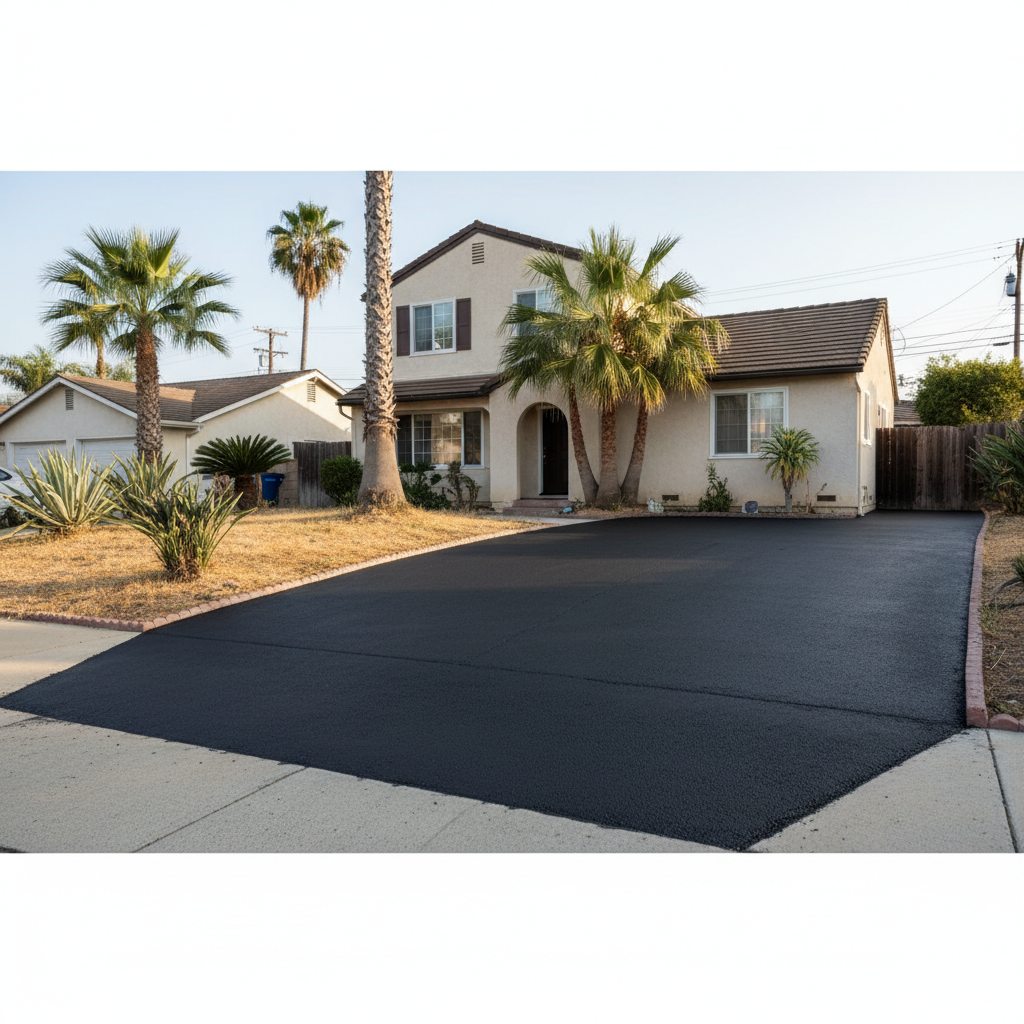
Alright, let's talk about slurry coating. Folks all over Long Beach — from Naples to Bixby Knolls — often ask me about the cost. Maybe you've got an asphalt surface, like a parking lot, a private road, or even a really big driveway, and it's starting to look a bit worn out. Slurry coating is a smart way to give it a fresh start, protect it, and make it last longer without all the hassle of a full replacement. But what's it actually going to cost you?
So, What Exactly Is Slurry Coating?
First things first, let's clear up what we're even discussing here. Slurry seal isn't the same as a basic sealcoat, and that difference really matters for your budget. A standard sealcoat is just a thin layer of asphalt emulsion, water, and some fine fillers. It's mostly for UV protection and making things look nice. Think of it like sunscreen for your asphalt, you know?
Slurry coating, or slurry seal, is a much tougher treatment. It's a mix of asphalt emulsion, water, fine aggregate (that's sand and crushed rock, by the way), and other stuff they add in. This blend makes a thicker, more durable layer that actually fills small cracks and surface flaws. It brings back the surface texture and gives you better skid resistance. Basically, it's like putting a new, thin wearing surface right on top of your old pavement. Because it uses aggregate and goes on thicker, it usually lasts longer than a simple sealcoat — often 8-10 years, compared to just 2-3 years for a sealcoat.
What Makes the Price Go Up or Down?
You want numbers, I get it. But before I give you some real-world ranges, you should understand why those numbers can vary so much. It's not just one set price. Here's what I consider when I'm putting together a quote:
- How Big the Job Is (Square Footage): This is the main thing. The more square feet you need coated, the more material and labor it'll take. But here's a tip: the cost per square foot usually drops for bigger areas. We can spread those fixed costs, like getting our equipment to the site and setting it up, over a larger space.
- How Your Existing Pavement Looks: This is a huge factor. If your asphalt has tons of cracks, potholes, or serious damage, we'll need to do more prep work. That means filling cracks, patching, and cleaning. The better condition your pavement is in, the less prep we have to do, and the lower your cost.
- The Type of Slurry Mix: Not all slurries are created equal. There are different grades and types. Some have special polymers or additives to make them extra durable or cure faster. A premium mix will cost more than a basic one.
- How Easy It Is to Get To: Is it a wide-open parking lot, or a narrow, winding driveway with lots of things in the way? Tight spots, steep slopes, or places that are hard to get to can mean more labor time and make the job more complicated.
- How Many Coats You Need: Most slurry jobs involve one thicker application, but sometimes we might suggest a second coat for extra durability, especially in busy areas. That will definitely add to the material and labor costs.
- Traffic Control: For commercial jobs, especially on busy streets, we have to manage traffic flow and make sure everyone is safe while we're working. That's a necessary expense.
- Striping and Markings: Slurry coating covers up existing lines. If you need parking lot striping, directional arrows, or ADA-compliant markings put back, that's an extra charge.
Typical Cost Ranges in Long Beach
Okay, let's get serious. These are estimates for Long Beach, CA, remember, and they can shift based on current material costs and who's available to do the work. Slurry seal generally costs more than a basic sealcoat because of the materials and the specialized equipment it needs.
- Residential Driveways (Small to Medium, 500-1,500 sq ft): You're probably looking at a minimum project cost of around $1,000 to $2,500. For a standard 1,000 sq ft driveway, that could break down to roughly $1.00 to $2.50 per square foot. This includes basic prep, of course.
- Larger Residential or Small Commercial (1,500-5,000 sq ft): For these sizes, the per-square-foot cost usually starts to drop a bit. Expect something in the range of $0.80 to $1.50 per square foot, making the total somewhere between $1,200 to $7,500.
- Medium to Large Commercial Parking Lots (5,000+ sq ft): This is where you really see the best per-square-foot rates. For a big lot, you might pay anywhere from $0.50 to $1.00 per square foot. So, a 10,000 sq ft lot could run you $5,000 to $10,000. The City of Long Beach itself has even said that slurry seal can cost about $2 per square foot for preventative maintenance on streets, which covers patch repairs and crack sealing.
Just remember, these are starting points. If your asphalt is really in bad shape, be ready to pay more for repairs before we can even think about putting down the slurry.
What Should a Good Quote Include?
When you get a quote from Diamond Asphalt Long Beach, or any other good contractor, make sure it's super detailed. It should clearly spell out:
- Total Square Footage: Double-check the area they're quoting.
- Surface Preparation: This is super important. It should specify cleaning, how many linear feet of cracks they'll fill, and any patching (square feet of patching).
- Type of Slurry Material: What kind of mix are they planning to use?
- Number of Coats: How many layers will they apply?
- Traffic Control Plan: If it applies, how will they manage access?
- Post-Application Services: Will they put your parking lot stripes back?
- Warranty: What kind of guarantee do they offer on their work?
- Timeline: When will they start, and when will they be done?
How to Avoid Paying Too Much
Nobody wants to get ripped off, right? Here's my advice for getting a fair price:
- Get a Few Quotes: Don't just go with the first company you call. Get at least three detailed bids from different contractors. This helps you compare apples to apples and really understand what the going rate is.
- Ask About Their Experience: Slurry sealing isn't something you can just do yourself. It needs special equipment and real know-how. Ask them how long they've been doing it and if they have local references.
- Understand the Prep Work: A super cheap quote might mean they're cutting corners on surface preparation, and that's just asking for trouble later. Make sure they're doing all the necessary crack filling and cleaning.
- Don't Just Pick the Cheapest Price: The lowest bid isn't always the best deal, believe me. Sometimes, paying a little more means better materials, more thorough prep, or a more experienced crew, which actually saves you money in the long run.
- Check References and Reviews: See what other property owners in Long Beach have to say about their work.
- Read the Contract Carefully: Make sure everything you talked about is in writing before any work even starts.
Slurry coating is a smart move to protect your asphalt. Do your homework, ask the right questions, and you'll end up with a great result that lasts. A good job, that's what we want!