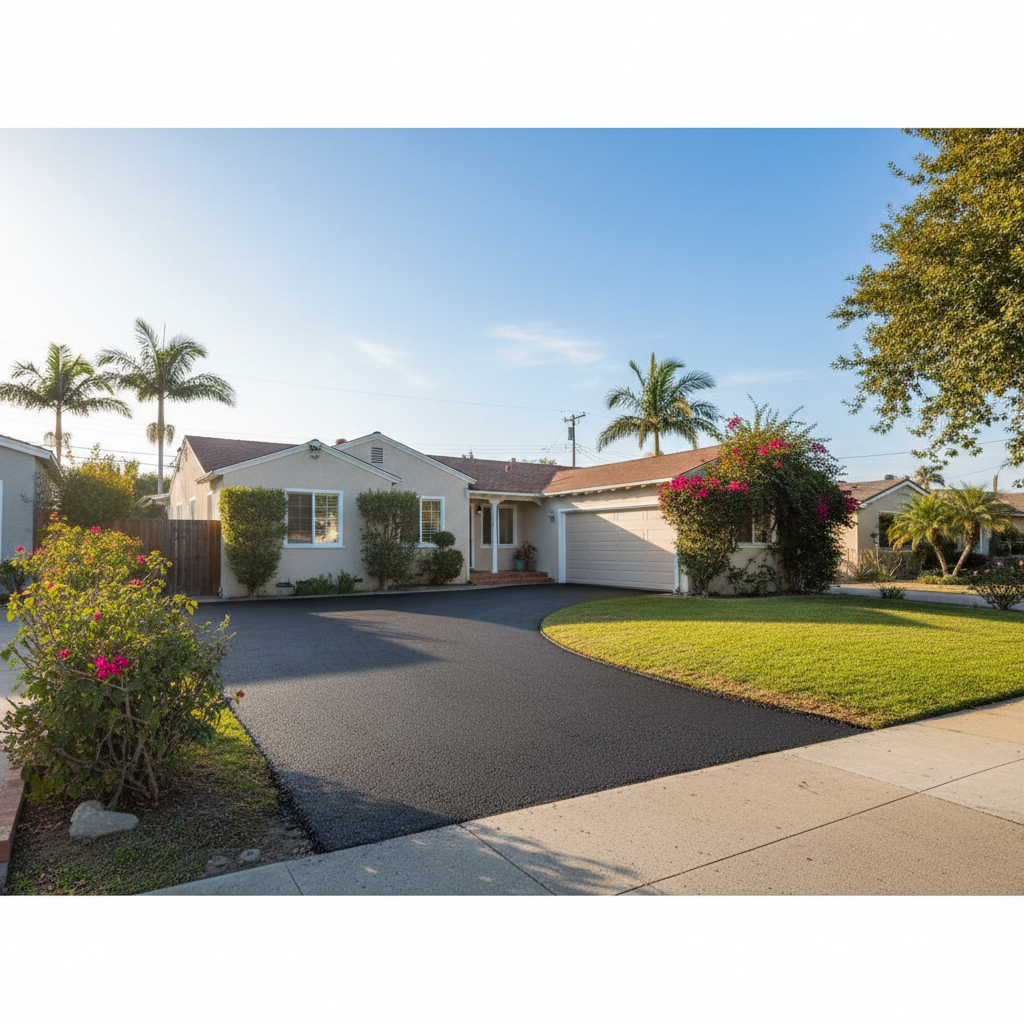
Alright, let's talk about driveway paving costs. It's one of the first questions folks ask me when they call Diamond Asphalt Long Beach, and it's a good one. Nobody wants to get ripped off, and frankly, there's a lot of wiggle room in pricing if you don't know what you're looking for. I'm going to lay out what you can expect to pay for a new asphalt or concrete driveway right here in Long Beach, and what factors really push those numbers up or down.
What Makes Driveway Paving Cost What It Does?
You probably figured it's not a one-size-fits-all price, right? There are a bunch of things that go into a quote, and understanding them helps you understand the price tag. Here's what I look at when I'm putting together an estimate:
- Material Choice: This is a big one. Asphalt is generally more budget-friendly upfront than concrete. For a standard residential driveway, asphalt might run you anywhere from $3 to $7 per square foot. Concrete, on the other hand, usually starts around $6 to $12 per square foot for basic gray, and can go way up for decorative finishes like stamping or exposed aggregate.
- Size and Shape: This seems obvious, but a bigger driveway means more material, more labor, and more time. A simple rectangle is also easier and faster to pave than a winding, irregularly shaped driveway with lots of curves. Every extra cut, every tight corner, adds to the complexity and thus the cost.
- Existing Driveway Removal: If you've got an old, cracked-up driveway that needs to go, that's an extra step. We have to break it up, haul it away, and dispose of it properly. This can add anywhere from $1 to $3 per square foot, depending on the material and how thick it is. Sometimes, if the base is good, we can just pave over it, but that's a different conversation.
- Site Preparation and Grading: This is crucial, especially here in Long Beach where we sometimes deal with older properties or areas with a higher water table. You need a solid, well-drained base for any driveway to last. If the ground needs a lot of excavation, filling, or serious grading to ensure proper drainage away from your house, that's going to add to the cost. Think about it: if water pools on your driveway, it's going to break down fast. A good contractor spends time on this.
- Drainage Solutions: Sometimes, just grading isn't enough. If your property has specific drainage issues, we might need to install catch basins, French drains, or other systems to manage stormwater. This is an extra cost but totally worth it to protect your investment and your home's foundation.
- Accessibility: Can our heavy equipment easily get to your driveway? If it's a tight squeeze, or we have to work around obstacles, it takes more time and specialized equipment, which can increase labor costs.
- Permits: Depending on the scope of work and local regulations, you might need a permit from the city of Long Beach. This isn't usually a huge cost, maybe a few hundred bucks, but it's something to factor in. A good contractor will handle this for you.
Typical Cost Ranges for Long Beach Driveways
Alright, let's get down to some real numbers. These are general ranges, and your specific project could be higher or lower, but this gives you a ballpark idea.
- Small Driveway (200-400 sq ft): Think a single-car driveway. For asphalt, you might be looking at $1,500 - $3,500. For concrete, it's more like $2,500 - $5,000. This is assuming a pretty straightforward job with minimal prep.
- Medium Driveway (400-800 sq ft): This is your typical two-car driveway. Asphalt could range from $3,000 - $6,000. Concrete would likely be $5,000 - $10,000. Again, this is for a standard replacement or new installation.
- Large Driveway (800+ sq ft): For bigger driveways, maybe with a turnaround or extra parking, asphalt could be $5,000 - $10,000+. Concrete would be $8,000 - $15,000+.
Remember, these numbers can jump if you're doing something fancy like stamped concrete, or if there's a lot of demolition and complex grading involved. Always get a detailed quote.
What Should Be Included in Your Paving Quote?
When you get a quote from me or any other reputable contractor, it shouldn't just be a single number. You want to see a breakdown. Here's what I always make sure to include:
- Demolition and Hauling: If applicable, this should be itemized.
- Site Preparation: Details on excavation, grading, and base material installation (e.g., how many inches of aggregate).
- Material Costs: Clearly state whether it's asphalt or concrete, the thickness of the new pavement, and any specific mix types.
- Labor Costs: The crew's time on the job.
- Drainage: If any special drainage solutions are needed, they should be listed.
- Permits: If the contractor is pulling them, that cost should be there.
- Cleanup: What they'll do to leave your property tidy.
- Warranty: A good contractor stands behind their work. Ask about it!
Make sure you're comparing apples to apples when you get multiple quotes. One contractor might be cheaper because they're cutting corners on the base, or using less material. You won't know unless you see the details.
How to Avoid Overpaying for Your Driveway
This is where you can really save yourself some headaches and money.
- Get Multiple Quotes: I recommend at least three. Don't just go with the cheapest. Look at the details of each quote.
- Check References and Reviews: See what other folks in Long Beach say about the contractor. Are they reliable? Do they do good work?
- Ask About Experience: How long have they been doing this? Do they specialize in driveways?
- Understand the Scope of Work: Make sure you and the contractor are on the same page about exactly what's being done. Don't assume anything.
- Don't Pay in Full Upfront: A reputable contractor might ask for a reasonable deposit (20-30% is common), but never pay the whole thing before the work starts. You want to be sure the job is done right before you hand over the final check.
- Look for Local Expertise: Someone who knows Long Beach soil conditions and building codes is going to do a better job than an out-of-towner. We know about the clay content in some of our soil, or how the salt air near the coast can affect materials.
Replacing or installing a new driveway is a big investment, but it's one that adds curb appeal and functionality to your home. Do your homework, ask the right questions, and you'll end up with a driveway that lasts for years without breaking the bank.