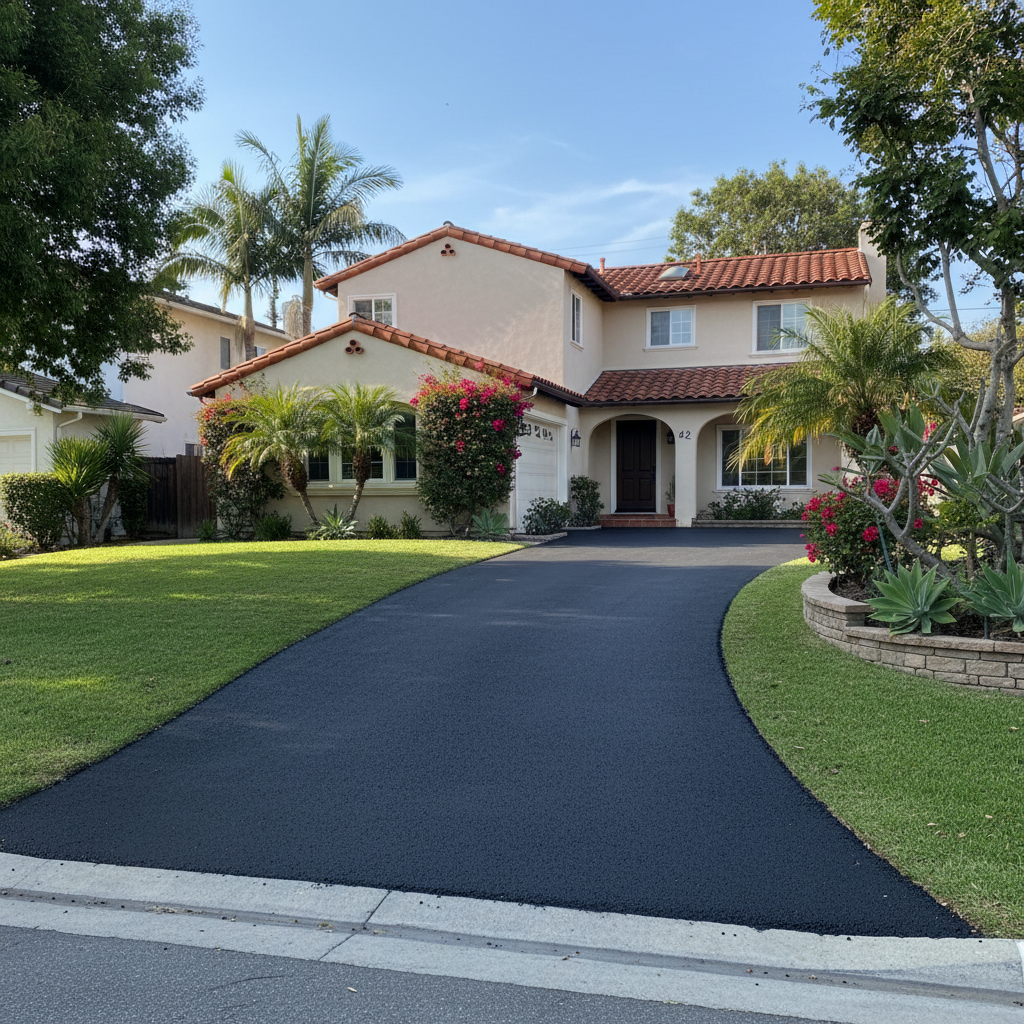
Alright, let's talk about residential asphalt projects right here in Long Beach. I've been doing this a long time, and honestly, I've seen plenty of folks make some pretty common — and expensive — mistakes when they're getting ready for asphalt work or hiring someone to do it. You're putting good money into your home, so you definitely don't want to end up with a driveway that's a constant headache instead of, well, a driveway.
Ignoring the Foundation (Literally)
This is probably the biggest blunder people make, and it's something you can't even see once the job is finished. Folks often fixate on the top layer of asphalt, but what's underneath? That's the real deal. Your asphalt is only as strong as its foundation, right? If the base isn't prepped and compacted the right way, you're just asking for trouble down the road. Think cracks, sinking spots, and moisture damage. Here in Long Beach, we've got all sorts of soil, from sandy bits near the coast to heavier clay inland, so getting that subgrade ready is absolutely crucial. You've got to clear out any unstable soil and organic stuff, then really compact each layer of the base. Skipping this step to save a few bucks upfront? That's a guaranteed way to pay a lot more for repairs later, believe me.
Underestimating Drainage Needs
Water is asphalt's worst enemy, plain and simple. I can't say this enough. If water just sits on your driveway, or even worse, seeps underneath it, your pavement's lifespan is going to be cut way short. Standing water weakens the whole structure, washes away important supporting materials, and really speeds up cracking. Your driveway needs a proper slope — at least 2% — to push water away from your house and off the surface. If your contractor isn't talking about grading and drainage from day one, that's a big red flag. We always make sure to plan for good runoff, sometimes even suggesting French drains if the situation calls for it, especially in areas that get a lot of water from the yard or neighboring properties.
Falling for the Low-Ball Bid
Everybody wants a good deal; I totally get it. But with asphalt, if a quote seems too good to be true, it almost always is. A suspiciously low bid usually means corners are getting cut. Maybe they're using cheap materials, rushing the work, or they've got hidden fees that'll pop up later. You're not just buying asphalt, you know? You're paying for expertise, the right equipment, and a job that's actually going to last. A quality job might cost a bit more initially, but it'll save you from early repairs and tons of maintenance later on. Think about it: would you buy the cheapest brakes for your car? Probably not. Your driveway is an investment in your home, so treat it like one.
Not Asking for Proof (License, Insurance, References)
This one seems basic, but you'd be surprised how many homeowners just skip it. Before anyone even touches your property, you absolutely have to check that they're licensed and insured. If they're not, you're taking a huge risk. If something goes wrong, like an accident or damage to your property, you could be held responsible. Ask for references and actually call them up. Look for reviews on third-party sites too. A reputable company, like Diamond Asphalt Long Beach, will be proud to show off their work and give you testimonials. If they don't have a portfolio or can't show you examples of past projects, that's a major warning sign.
Rushing the Job or Ignoring Weather
Asphalt paving isn't some kind of sprint. It needs to be laid and compacted correctly, and that takes time — and the right conditions. Really hot or cold temperatures, or rain, can totally mess with how the materials compact and bond. Here in Long Beach, we don't usually deal with freezing temps, but rain can pop up unexpectedly, and extreme heat can be a problem too. A good contractor will keep an eye on the forecast and schedule the work when the weather is right to make sure you get a smooth, strong finish. Don't let anyone pressure you into a job when the weather isn't cooperating.
Paying Too Much Upfront
While a down payment for materials is pretty common and reasonable, you should be very wary of any contractor who demands full payment before they even start. That's a classic red flag. A clear, written contract that spells out the work, costs, and timeline is absolutely essential. It protects both you and the contractor, making sure everyone's on the same page. Relying on a verbal agreement? That's just asking for misunderstandings and potential headaches, wouldn't you say?
Look, your driveway is a big part of your home's curb appeal and how functional it is. Avoiding these common mistakes means you'll get a durable, long-lasting surface that you're genuinely happy with for years. Do your homework, ask the right questions, and don't be afraid to walk away if something just feels off. It's your money, and you deserve a quality job.