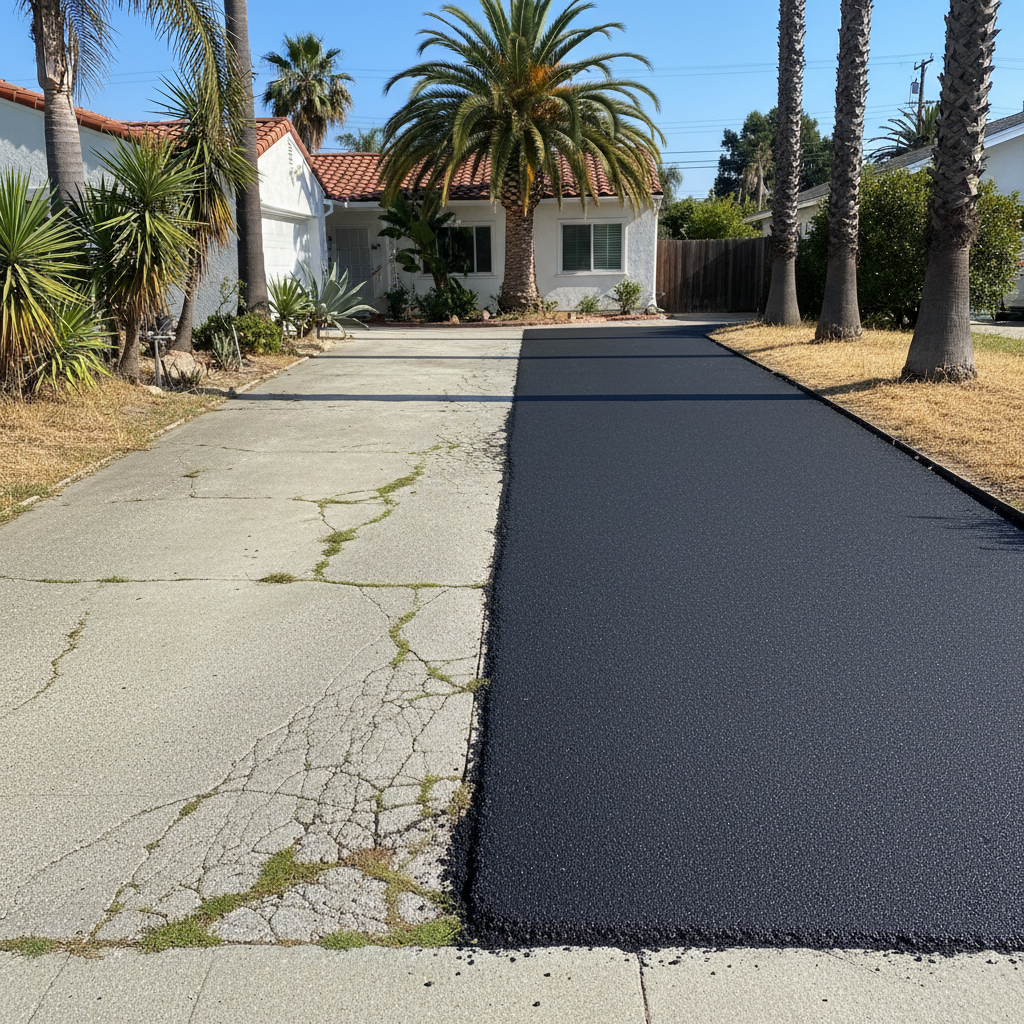
Your asphalt driveway's seen better days, right? Maybe it's got cracks, potholes, or just looks tired. So, what's the move? Do you just slap a new layer on top, or do you rip it all out and start fresh? That's the big question a lot of homeowners in Long Beach ask me, and it's a good one. Let's talk about the two main options: an asphalt overlay versus a full asphalt replacement.
Asphalt Overlay: The Quick Fix (Sometimes)
An overlay, sometimes called resurfacing, is exactly what it sounds like. We clean up your existing asphalt, repair any major cracks or potholes, and then put a new layer of asphalt right on top. Think of it like giving your driveway a fresh coat of paint, but with a lot more structural integrity.
Cost: This is usually the big draw for overlays. They're significantly cheaper than a full replacement, often 40-60% less. You're saving on demolition, hauling away old material, and less new material needed. For folks in places like Belmont Shore, where driveways might be smaller and budgets tighter, an overlay can be a really attractive option.
Durability: This is where it gets tricky. An overlay's durability depends entirely on the condition of the existing asphalt underneath. If the base layer is solid – meaning no major structural issues, deep cracks, or widespread alligator cracking – then an overlay can last a good 8-15 years. But if the underlying asphalt is failing, that new top layer is just going to crack and fail right along with it. It's like putting a new bandage on a broken bone; it looks good for a bit, but it doesn't fix the real problem.
Maintenance: Regular sealing every 2-3 years is still crucial, just like with any asphalt. You'll want to address any new cracks as they appear to prevent water from getting underneath and undermining the new layer.
Appearance: A properly done overlay looks fantastic. It gives you that brand-new, smooth, black finish that really boosts your curb appeal.
Full Asphalt Replacement: The Long-Term Solution
A full replacement means we tear out all the old asphalt, down to the dirt. Then, we prepare the subgrade, lay down and compact a fresh aggregate base, and finally, install new layers of asphalt. It's a complete do-over from the ground up.
Cost: Yeah, it's more expensive. There's a lot more labor involved with demolition, hauling, and more materials. But you're paying for a brand-new foundation, which is where the real value is.
Durability: This is where a full replacement shines. With a properly prepared base and new asphalt, you're looking at 20-30 years of life, sometimes more, especially if you keep up with maintenance. You're not inheriting any of the old problems. This is especially important in Long Beach where our clay soils can shift and cause issues if the base isn't properly handled from the start.
Maintenance: Like an overlay, regular sealcoating and crack filling are necessary to maximize its lifespan. But because the foundation is new and solid, you're less likely to see major issues pop up prematurely.
Appearance: Just like an overlay, a new asphalt driveway looks sharp. The difference is, with a full replacement, you know that beauty goes all the way down.
So, Which One Should You Choose?
Here's my honest take. The decision really boils down to the condition of your existing driveway's foundation. I always tell folks, if your driveway has:
- Widespread deep cracks (more than an inch wide)
- Significant potholes that go all the way through
- Large areas of